The temptation of a blank canvas
In urban renewal the temptation of large-scale demolition and starting anew is never far away. Designing on a blank canvas is easier. A brownfield is complex. Existing sheds, self-built houses, economic networks, trees, and buildings constrain design freedom and increase costs. Worldwide we have a design-task to tackle the complexity of brownfields. And I challenge the paradigm of demolition-new construction. It is refuted by the universal law of creation that invites us to always build upon appreciation for what already exists. Working without this appreciation means that everything must be rebuilt, not only the physical environment. This takes years to complete, mainly because a neighborhood consists of both hardware and software.
Put differently: the design of a neighborhood is, by definition, a combination of top-down choices and bottom-up development, whether this is acknowledged or not. Residents do co-create the urban environment in the use phase. They co-create or re-create and with that develop a neighborhood into an interesting environment. Acknowledging this allows it to be used as an asset in creating a livable, happy neighborhood.
Another perspective on the same issue is resilience, now central in urbanism. One of its key characteristics is diversity: diversity of people, buildings, facilities, and public space. Diversity evolves far more easily by adding new elements to an existing fabric in co-creation with residents than by developing apartment buildings with standard floor plans and predefined square meters of commercial space.
Finally, without even taking a sustainability standpoint, common sense applies: there are currently so many brownfields that we simply cannot endlessly demolish and rebuild them every 50 years. The waste of material would be enormous.
At its core, renewing a neighborhood means unpacking, deepening, and widening the complexity that is already present. And adding new insights and freshness. And carefully demolishing what truly is in too poor condition or in no way suitable for today’s and tomorrow’s urban life.
Financial logics vs. ambitions
Turning to the financial dimension of both developments, any description remains indirect at this point in time, as figures are not public and many uncertainties persist due to the early stage of the development. In Rotterdam, the municipality intends to sell the land to various developers. The city bears the costs of preparation, both in planning and on site. These costs are incorporated into a business case. Land prices are calculated using a residual method: market value of housing minus building costs. Ideally, this leads to municipal income, which can be used for other developments in the city. High ambitions increase building costs and reduce yield. Similarly, complex site preparation due to existing structures raises expenses. Still, mainstream thinking insists that the business case must be positive and land sales must generate income.
So, the ambition for this neighborhood Schiehaven-North is to become Paris-proof, alongside nine other ambitions. These are outlined in the Area Ambition Document adopted by the City Council, which now forms the basis for a masterplan and urban design. Paris-proof entails a state-of-the-art integration of sustainability insights. In general, sustainable building requires higher initial investment, leading to lower maintenance costs and greater durability during the use phase.
In Rotterdam’s financial reality, when the city requires sustainability ambitions, the building costs increase, reducing the outcome of the residual land-value calculation. It is therefore no coincidence that the document states: we build Paris-proof, unless…
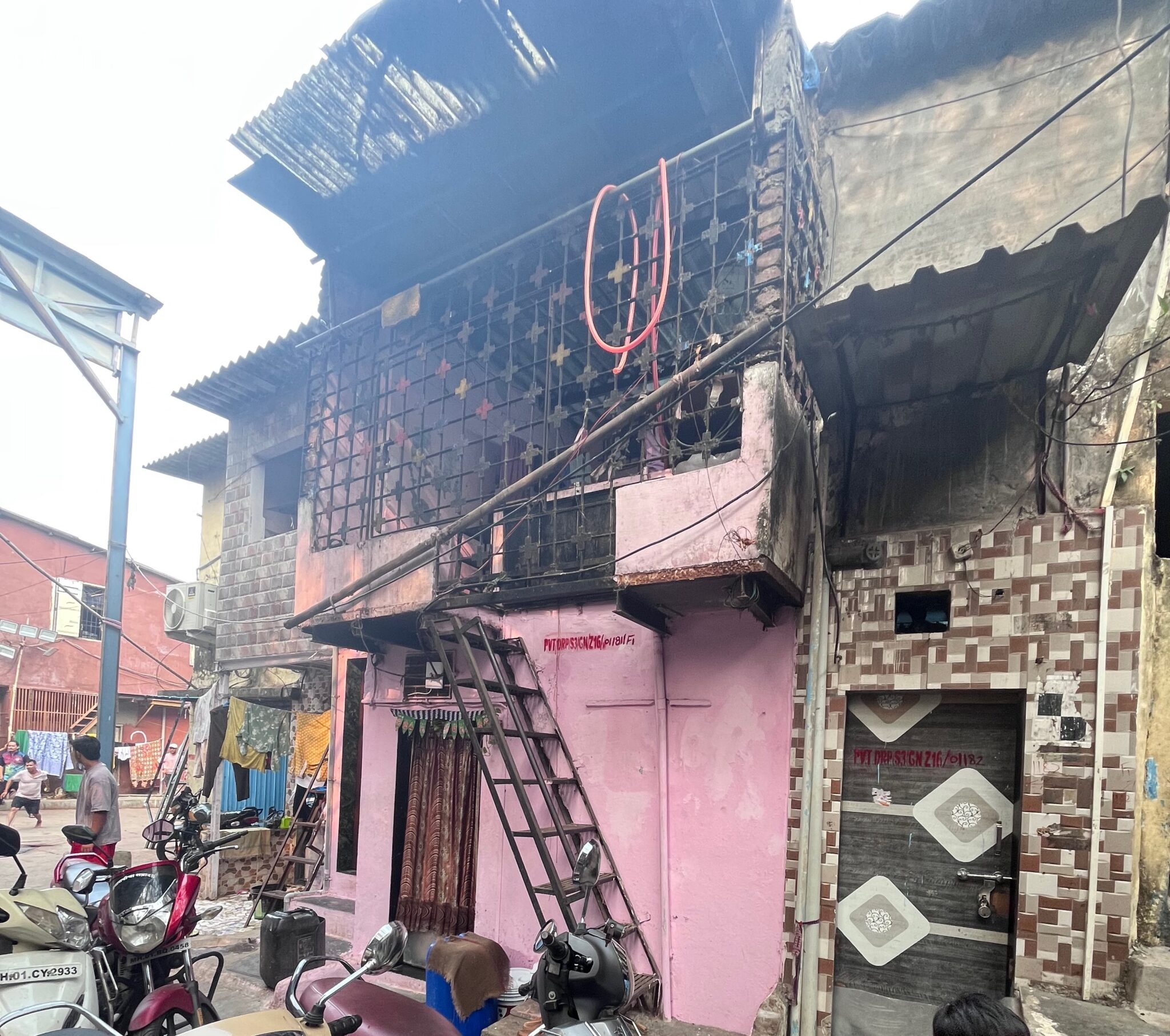
Mumbai, or the Maharashtra regional government, faces a different ambition in in its attempt to ‘clean up’ the parts of Dharavi referred to as slums. Because present housing is largely self-built and work is organized close to home, offering the households new housing introduces a fundamental dilemma. Maintenance costs or rent per household will increase, while income is put at risk as existing networks of work and production are disrupted. In the past, this has resulted in newly built housing that deteriorated rapidly due to a loss of income among residents. It is often said that residents chose to sell or rent out their new homes and construct another dwelling elsewhere, once again in informal settlements. This cycle has forced the city of Mumbai to search for creative solutions to prevent the repeated loss of public investment.
Property and ownership
The fundamental issue in real estate lies in short time horizons: governments seek income quickly, developers seek rapid profit, while urban environment and their buildings endure for decades or centuries. Why extract profit swiftly? Extending the horizon of involvement allows continued responsibility for neighborhood and buildings, while they could still generate yield. It is simply a different model.
It can be traced back to a struggle with the same underlying paradigm. Housing worldwide has become primarily an investment asset, rather than a living environment. In my view, both cities are prey to this paradigm that is not serving society. There is a crucial difference between property and ownership. Property reduces housing and land to a tradable product. Many real estate developers see land and buildings as property. Ownership is something completely different. With ownership comes responsibility, some love and care. People don’t live in property; they live in environments shaped by care. So we are in desperate need of ownership to contribute to happy neighborhoods.
Boomeranging cost for government
This brings me to looking at the role of the government, whether city (Rotterdam) or region (Maharashtra). In a world dominated by free market-preferences, its role has narrowed to setting ambitions and mitigating the most harmful effects. Yet an unpleasant reality accompanies this limited role. Ultimately, government is the one and only party that feels responsibility for society as a whole. Whenever the market fails, costs boomerang back to government, whether in banking systems or neighborhoods. When a system that should serve all falls apart, everybody looks at the government: why don’t you care for your people? By then, developers have already realized their profits.
This simple truth demands a fundamental reconsideration of how governments invest in cities and collaborate with market parties. This is not a plea to exclude the market, but a call for greater intelligence and care in ensuring that the general interest is genuinely served.
Expanding time horizons
Maharashtra government’s approach is striking, as can be read in formal documents used in the bidding process and the establishment of a shared entity. In the case of Dharavi, a different approach was chosen. A Special Purpose Vehicle was created with the Adani Group, the developer that won the bid: Navbharat. The government holds a stake of 20% in Navbharat. Integrated in the agreements is the requirement that operations, maintenance and security for a period of 10 years remain the responsibility of the developer. This avoids a hit-and-run approach and increases ownership of the neighborhood even after housing construction is completed. Maharashtra government expands the time horizon with this set-up.
By retaining a stake in the development, the city keeps a finger on the pulse, aiming to prevent the renewed neighborhood from being abandoned before it has had the chance to mature. The role of the government is primarily controlling, with the intention of steering Dharavi’s future in a more favorable direction.
At first glance, again, this approach may seem irrelevant to Rotterdam. Yet a closer look reveals the similarities. The city of Rotterdam has reached the simple yet groundbreaking conclusion that while it can facilitate the construction of a Paris-proof neighborhood, construction is only one phase. Meaningful and lasting change occurs during the use phase of the neighborhood. So, they are also looking at a completely different way to extend the time horizon.
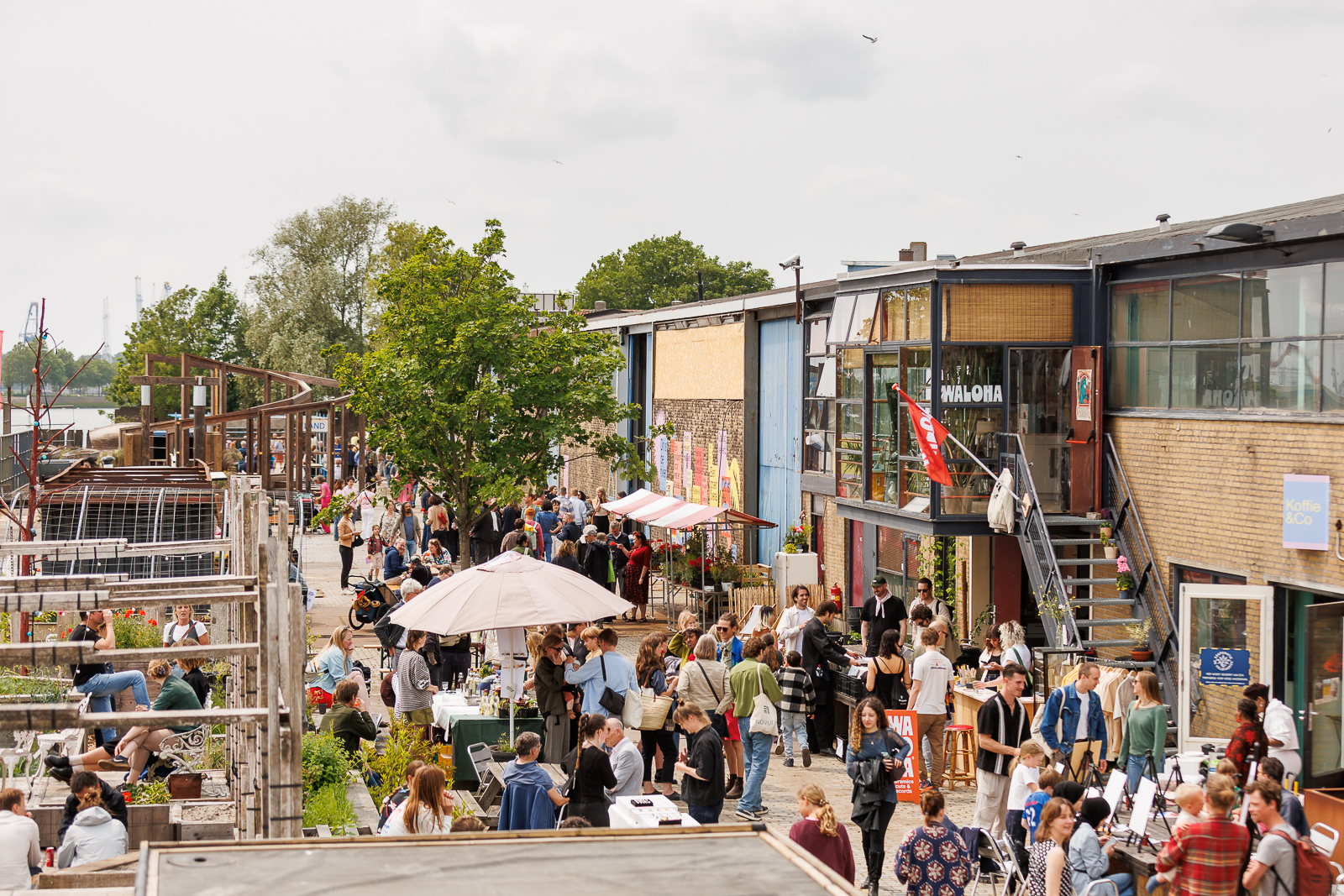
Cautiously, an experiment has begun: the Schiehaven Citizens. This initiative is endorsed by a project developer TBI/ERA Contour which holds a development claim in the area. One might ask whether TBI’s steward-owned company structure instilled more ownership thinking rather than purely property thinking in their genes. What is the idea of these Citizens? The current parties in the eco-system of the area and a party accelerating housing cooperations in Rotterdam are formally organizing themselves as future users and residents. The ambition is to close the gap between development, build and use of the area, and with that extend the time horizon. For both the developer and the city this is highly unusual. Although in The Netherlands there is a strong tradition of participation processes in city developments, this is different.
Here these Schiehaven Citizens will claim a formal position in the development process. Let me underline the value of this approach in practical terms. There is, for example, an idea to create some m2 communal space in every future apartment building. But who will feel ownership of this space? Is the space adequate for its users, or will it immediately require remodeling? Or another example: the current eco-system can already provide on-the-ground services, such as regenerating soil to prepare it for future nature. Excluding this option, will result in the city later paying a landscaping company to do the same with new materials and at a higher cost. And final example: public green space may be beautifully designed, but again the question arises: who will feel ownership for this? A neighborhood with high sustainability standards requires ownership and not passive consumerism. And this ownership must be woven in the development phase.